

Composting is a key component to successful homesteading.
Think of all the daily kitchen scraps wasted! Start your composting bin to repurpose those scraps into your very own affordable – truly organic – fertilizer! There are many ways to go about this, but I’m all about simplicity, cost efficient and space savvy! After a bit of researching this is what I have chosen for starting my backyard gardening venture.Easy Trash Can Compost Bin
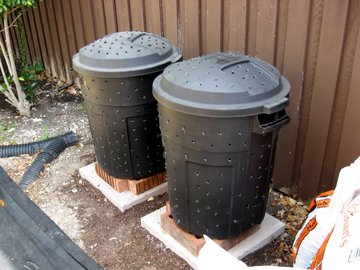
What do you put into your trash can composter?
- Fruit and vegetable peels and cores
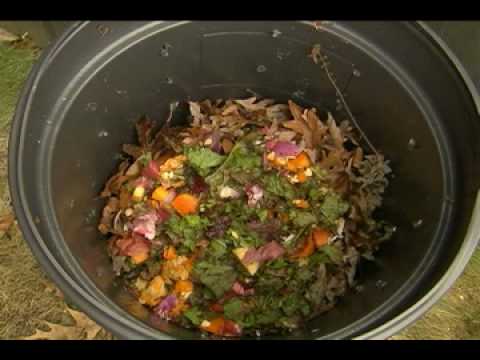
- Leftover cooked veggies (as long as they don’t have salt or butter on them)
- Produce that’s past its prime
- Coffee grounds
- Tea leaves and tea bags
- Egg shells
- Shredded paper & newspaper
- Small twigs
- Weeds, leaves, grass clippings and spent flowers from the garden
- Wood shavings
How To Use Your Compost
You’ve spent a couple weeks building and producing some rich natural compost and now it’s time to use it! Compost is ready to use when it is dark, brown, and crumbly with an earthy odor. It would not be moldy and rotten. There is usually some life it in – earth worms and other insects. Finished compost can be used in a layer on top of your soil to nourish the plants underneath. You can also mulch it in if you choose, though water will carry nutrients down into the soil when just left on top – this is called top-dressing. You can top-dress a garden, a tree, even a lawn – just sprinkle it in!Maintaining Your Compost
As your materials are decomposing, it goes through a heating and cooling process. During this process, the cooler the pile, the slower it will turn into compost. When first starting out, you shouldn’t re-add to your pile too often because new material will cool the pile down and will be behind the stuff that’s already “cooking”. It’s a good idea to have a good amount built up before expecting too much out of your bin. Once a pile is truly up and running though, it can easily absorb new material without necessarily being slowed down. Kitchen garbage, especially, which tends to be soft and fairly high in nitrogen, can be dug into the center of a hot pile where it will disappear within days without cooling and slowing down the current compost.Sources: Planet Natural, University of Illinois Extension, The spruce
Originally posted on MamasVoice.ca.
Now part of our family’s story at Wisekal.ca.
Leave a Reply